Research Proposal on Picasso's Guernica
Below you will find my REFLECTION & Research Proposal on:
HOW DOES GUERNICA EMPLOY A VISUAL LANGUAGE OF RELATABLE CIVILIAN SUFFERING TO ACTIVATE ORDINARY VIEWERS, AND WHAT EVIDENCE EXISTS THAT THIS WAS A DILLERATE STRATEGY TO ENVOKE PATHOS
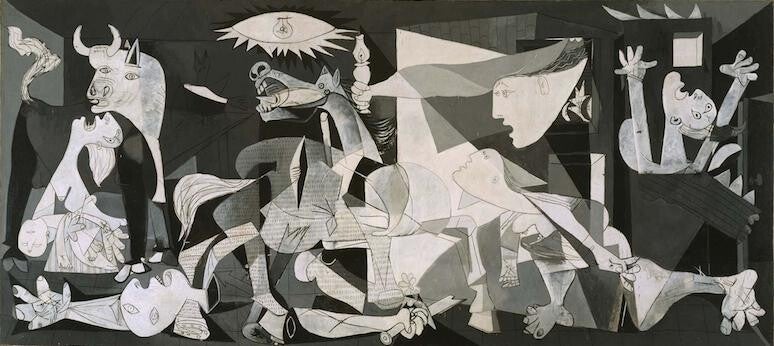
Upon reflection, this research proposal identifies to the reader the ability to formulate a focused arguable research question that contributes to the existing scholars. This is apparent as this proposal effectively identifies the gap as studies of visual rhetoric identify Guernica's persuasive mechanisms (color, layout, symbolism) but does not systematically reflect those mechanisms to audience responses. Where I stated, "studies of visual rhetoric identify the painting's mechanisms but rarely trace them to documented viewer responses." Furthermore, I validated this further in the passage "Studies of reception demonstrate that viewers were moved but do not systematically connect those responses back to perceived rhetoric nor have these inquiries validated Picasso's intended attempt in establishing an emotional response through his images within Guernica." However, contradictory to this Young et al. was highlighted in saying "Guernica was a complete success. The public has now come to understand the emotional power of Picasso's image", that in itself allows a greater dynamic of how this proposal warrants further incite as well as validating a legitimacy to the intended research. This allows the reader to recognize a solid key learning outcome in respect of the pursuit of understanding in pathos as it relates to Guernica. The course learning outcomes would certainly further reflect a better understanding of how to perceive and identify pathos through interpretation and through disciplined synthesis of scholarly perspectives alongside public, institutional and oppositional responses, grounding emotional analysis in evidence rather than bias or misperception. This reinforces the depth of course learning through the challenge of scholarly interpretation.
Add comment
Comments
wow, grammatical typo in the first paragraph, did you even proofread this? geez.... aside from that...I'm somewhat impressed!